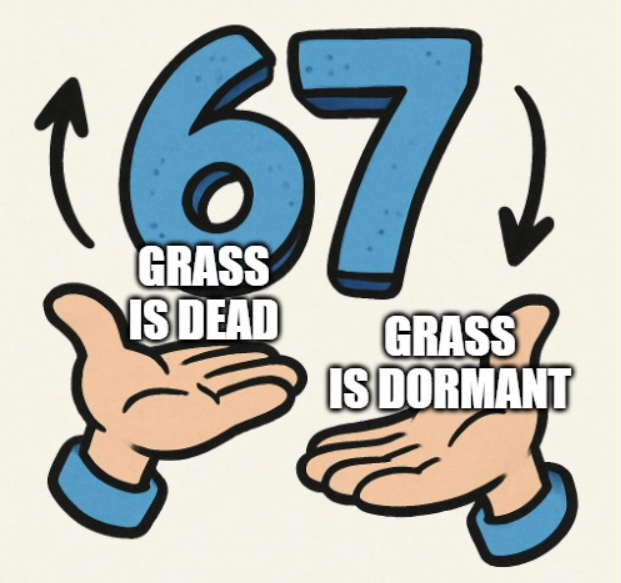
When winter arrives and your lawn turns brown or stops growing, many homeowners assume the grass has died and will need to “come back” in spring. In most cases, that’s not true at all. Cool-season grasses like Kentucky bluegrass, fescue, and perennial ryegrass are mostly still alive all winter long, even when they’re covered by snow or the ground is frozen.
As temperatures drop in the fall, grass prepares itself for winter. Instead of putting energy into growing leaves, the plant stores food underground in its roots and crown (the base of the plant). Think of this like a bear eating extra food before winter so it can hibernate. That stored food is what keeps the grass alive until warmer weather returns.
Even in winter, grass plants are still breathing, just very slowly. This process is called respiration. Respiration is how plants use stored energy to stay alive, repair themselves, and keep their cells functioning. Grass isn’t growing during this time, and it isn’t making new food from sunlight, but it is quietly using the energy it saved in the fall to survive.
Snow can actually help your lawn. A layer of snow works like a blanket, protecting the grass from harsh winds and extreme cold. Under snow, the soil temperature stays more even and usually warmer than the air above it. This gives the grass a safer environment to get through the winter months.
Problems tend to happen when grass goes into winter weak or stressed, or when winter conditions are rough. If the ground freezes deeply, the grass can’t take in water, yet it still slowly uses energy to stay alive. Over time, this can leave the plant tired and slow to wake up in spring. That’s why lawns that were healthy in fall usually green up faster than lawns that struggled late in the season.
The important thing to remember is this: your lawn is not dead in winter. It’s resting, conserving energy, and waiting for soil temperatures to warm up. When spring arrives, green-up happens because the grass survived the winter — not because it magically came back to life.